Translate

Showing posts with label Touch Artists. Show all posts

Wednesday, January 17, 2018

Multi-Sensory Experiences at the Metropolitan Museum of Art, NYC

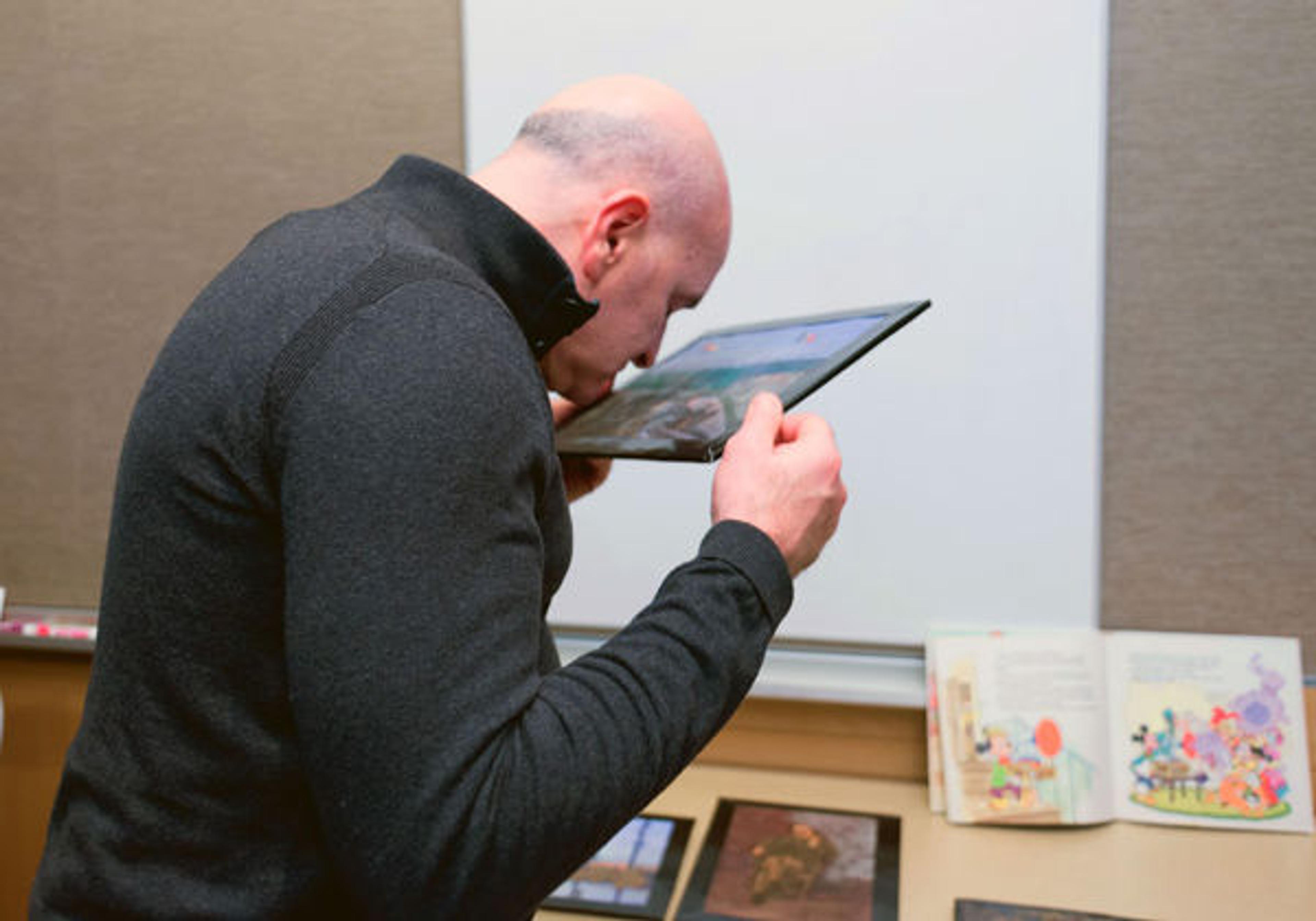
A visitor experiencing Multisensory Met at the spring 2015 MediaLab Expo

A visitor smelling a scratch-and-sniff painting at the spring 2015 MediaLab Expo. Image courtesy of the author

From Don Undeen, Senior Manager of MediaLab:

The MediaLab has been fortunate enough to work frequently with the Met's fantastic Access Programs and Community Programs Office in exploring ways that museums can be more welcoming to visitors of diverse abilities. One of the concepts we've been learning about is universal design, which is the idea that products and experiences should be constructed to be usable by a wide range of people regardless of disability, age, or background. A corollary to this is that when you design for accessibility you generally end up producing results that benefit everyone. After a discussion about how to make the museum experience available to blind and partially sighted visitors, Ezgi created a suite of products that can bring anyone closer to the Met's collection.

Multisensory Museum Experience

«In the majority of museums, visitors can only experience the artworks by viewing them. Most museums work to make sure that galleries have neutral smells and sounds so that the visitor can focus on the artworks, but those factors can alter the experience significantly. All of the senses—sight, sound, touch, smell, and hearing—are a part of the museum experience.»
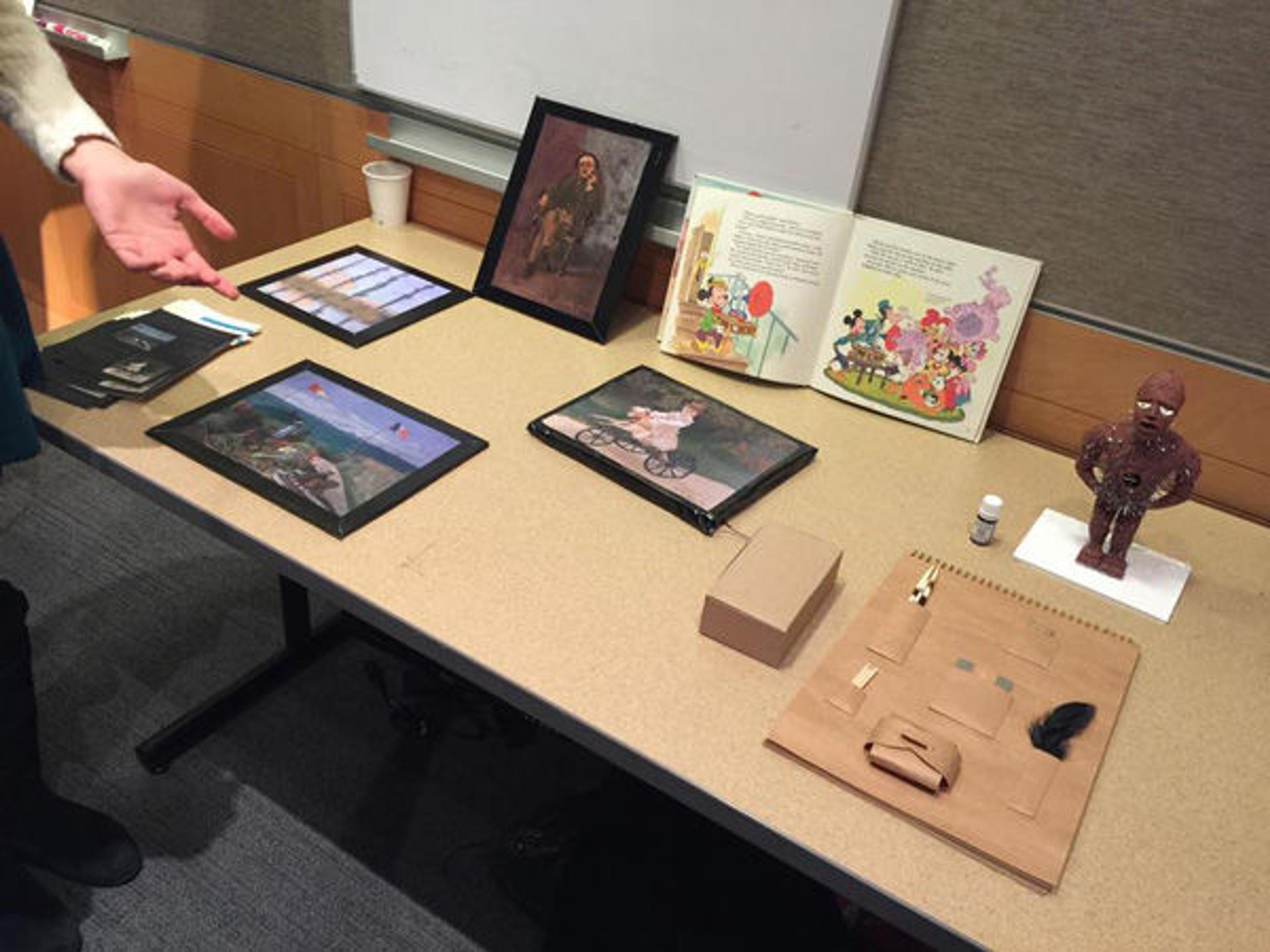
Multisensory Met, a series of activities designed to create a more fulfilling museum experience, in the spring 2015 MediaLab Expo. Image courtesy of the author

In order to protect the artworks, visitors are strictly forbidden from having any physical contact with the art. This inspired me to create Multisensory Met, a series of activities designed to provide a museum experience that makes use of all the senses. I believe that creating a multisensory environment will truly enhance the museum experience.

More to see in link below. 

Sunday, May 15, 2016

Touching the Prado, Estudios Durero, Spain


Instead of having the paintings’ details described, now they can also be felt — offering a different sensory experience to great works of art. In fact, by touching one’s way through an artwork, the sight-impaired can create a mental map of the entire piece, and potentially develop a more emotional response to the experience as well. 


3D Printed Tactile Books, Tom Yeh, University of Colorado Boulder

Tactile Maps


The tactile maps are finely detailed and include representations of buildings, railways, roads, and waterways. Varied heights and textures differentiate the different topography; most bodies of water are represented by wavy surfaces, while smaller streams are just narrow lines. Pedestrian roads are raised higher than other roads, as the visually impaired utilize them more frequently. The user’s selected address is marked as a raised cone, and the map’s northeast corner is specially marked to ensure proper orientation.
Samuli Karkkainen, Designer, Finland
3dprint.com


Rutgers engineers 3D print tablet sized campus maps for students.
Howon Lee, Assistant Professor, Department of Mechanical and Aerospace Engineering.
Jason Kim, Engineering Student
3dprint.com

Virtual Curation Laboratory, Bernard Means, PhD, VCU


The Virginia Historical Society is one museum working to create ways for Drudge and others like her to experience historical artifacts for themselves. Andrew Talkov, vice president for programs at the museum, recently enlisted the help of Bernard Means, PhD an anthropology professor at Virginia Commonwealth University, to begin creating some 3D printed artifacts that people could touch and hold.
“I’m trying to figure out how we can use 3-D printing to make the experience better for everybody — because who doesn’t want to be able to handle the [artifact] that’s behind the glass, even if it’s just a reproduction — but specifically for the visually impaired,” said Talkov.

Dr. Means is the director of VCU’s Virtual Curation Laboratory, which is dedicated to creating a digital archive of historical artifacts. The lab also uses a 3D printer to create replicas of certain items for exhibits. The professor was happy to help, and took a few days to scan and print a number of artifacts from the Historical Society, including a wheel from a Conestoga wagon, a cigar store Indian from 1924, and an iron breastplate, circa 1622, on loan from the Virginia Department of Historic Resources. Perhaps coolest of all, he also scanned and 3D printed George Washington’s signature from a letter the President had written to his stepson.
“The idea behind 3-D printing a signature is that you can tell people that George Washington signed this document, but even if you could hold the real thing — which, of course, you can’t, [because] it’s too fragile — it’s not going to mean anything to you if you’re visually impaired,” said Dr. Means. “Even if you translate that document into braille, you’re getting a translation of that document. But by 3-D printing [Washington’s signature], somebody could trace it and feel it, and get a sense of the ‘G’ and [Washington’s] cursive. This is actually touching George Washington’s signature.”
For Kimmy Drudge, who visited the museum recently, the experience was everything she’d never been able to get from museums before. Her face lit up as she ran her fingers over the 3D printed replica of Washington’s signature. 

Friday, September 19, 2014

Neora Zigler, Designer of Sento Tactile Cookware


‘sento tactile cookware’, israeli student neora zigler‘s final project in hadassah college’s inclusive
 industrial design department,is a set of cooking utensils for the blind and sight impaired. the cooking
 utensils encourage a cooking experience that takes advantageof all the senses, and answers the practical
needs of the blind and sight impaired.two points were emphasized in the creation of the set: first, to
create a set of safe-to-use cooking utensils that will assist the blindin basic cooking; and second,
to intensify the sensual cooking experience (smell, taste and feel) for all users, even those without
sight impairments. ‘sento tactile cookware’ solves day-to-day problems such as fire and heat hazards,
measuring and quantifyingaccurately, and having a clean and organized working environment
in the kitchen, thus responding to the entire population’s needs not just those of the blind.

Text and image from Design Boom. Much more to see. Link here.


Friday, May 20, 2011

Vietnam Memorial, Washington D.C., Maya Lin


Original sketches submitted by Lin for design competition of Vietnam Memorial.


Trailer for the documentary film, A Strong Clear Vision. 


Lin posing with model for Vietnam Memorial. 


Watch on You Tube

Vietnam War, 1955 - 1975