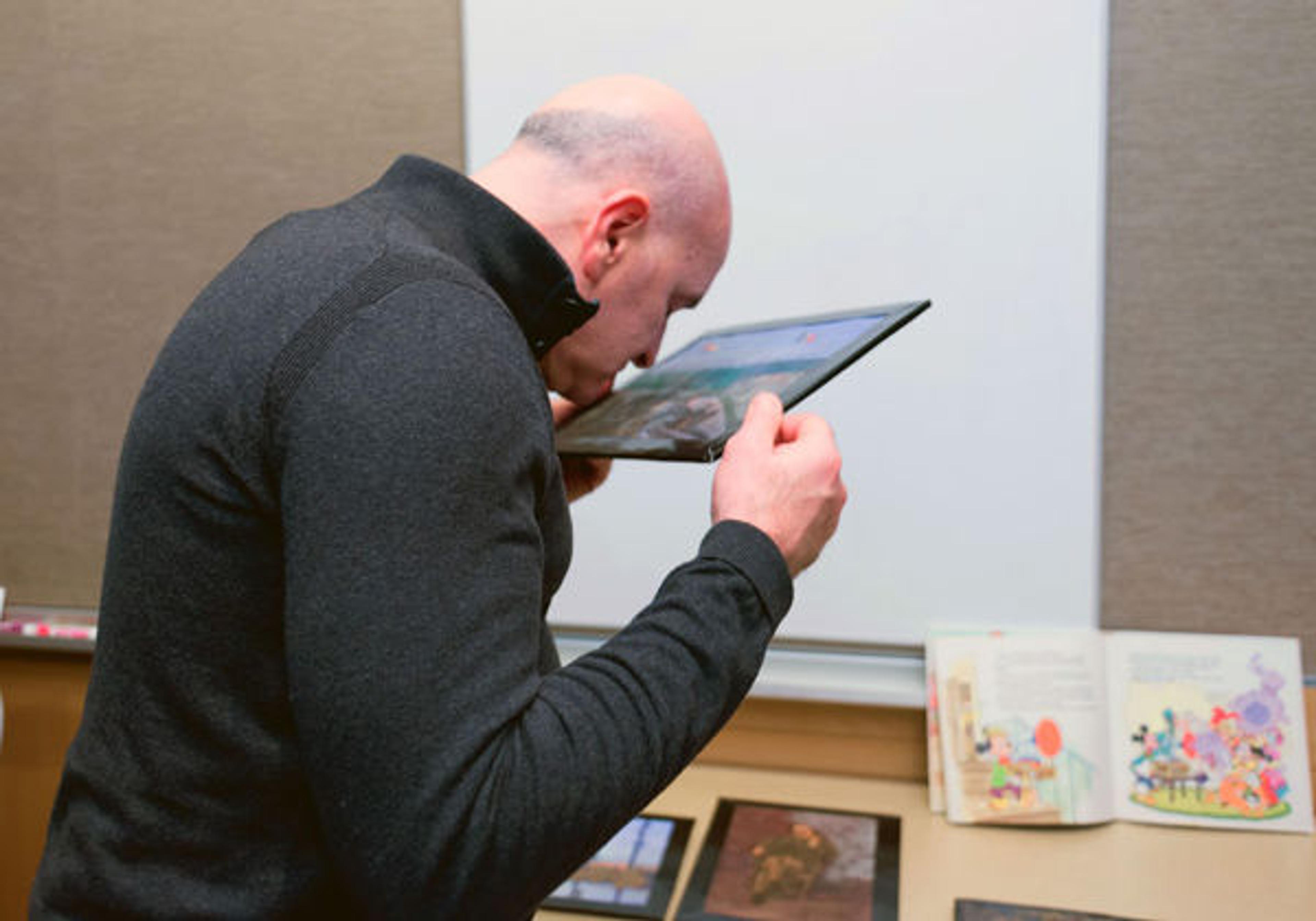
A visitor smelling a scratch-and-sniff painting at the spring 2015 MediaLab Expo. Image courtesy of the author
From Don Undeen, Senior Manager of MediaLab:
The MediaLab has been fortunate enough to work frequently with the Met's fantastic Access Programs and Community Programs Office in exploring ways that museums can be more welcoming to visitors of diverse abilities. One of the concepts we've been learning about is universal design, which is the idea that products and experiences should be constructed to be usable by a wide range of people regardless of disability, age, or background. A corollary to this is that when you design for accessibility you generally end up producing results that benefit everyone. After a discussion about how to make the museum experience available to blind and partially sighted visitors, Ezgi created a suite of products that can bring anyone closer to the Met's collection.
Multisensory Museum Experience
«In the majority of museums, visitors can only experience the artworks by viewing them. Most museums work to make sure that galleries have neutral smells and sounds so that the visitor can focus on the artworks, but those factors can alter the experience significantly. All of the senses—sight, sound, touch, smell, and hearing—are a part of the museum experience.»
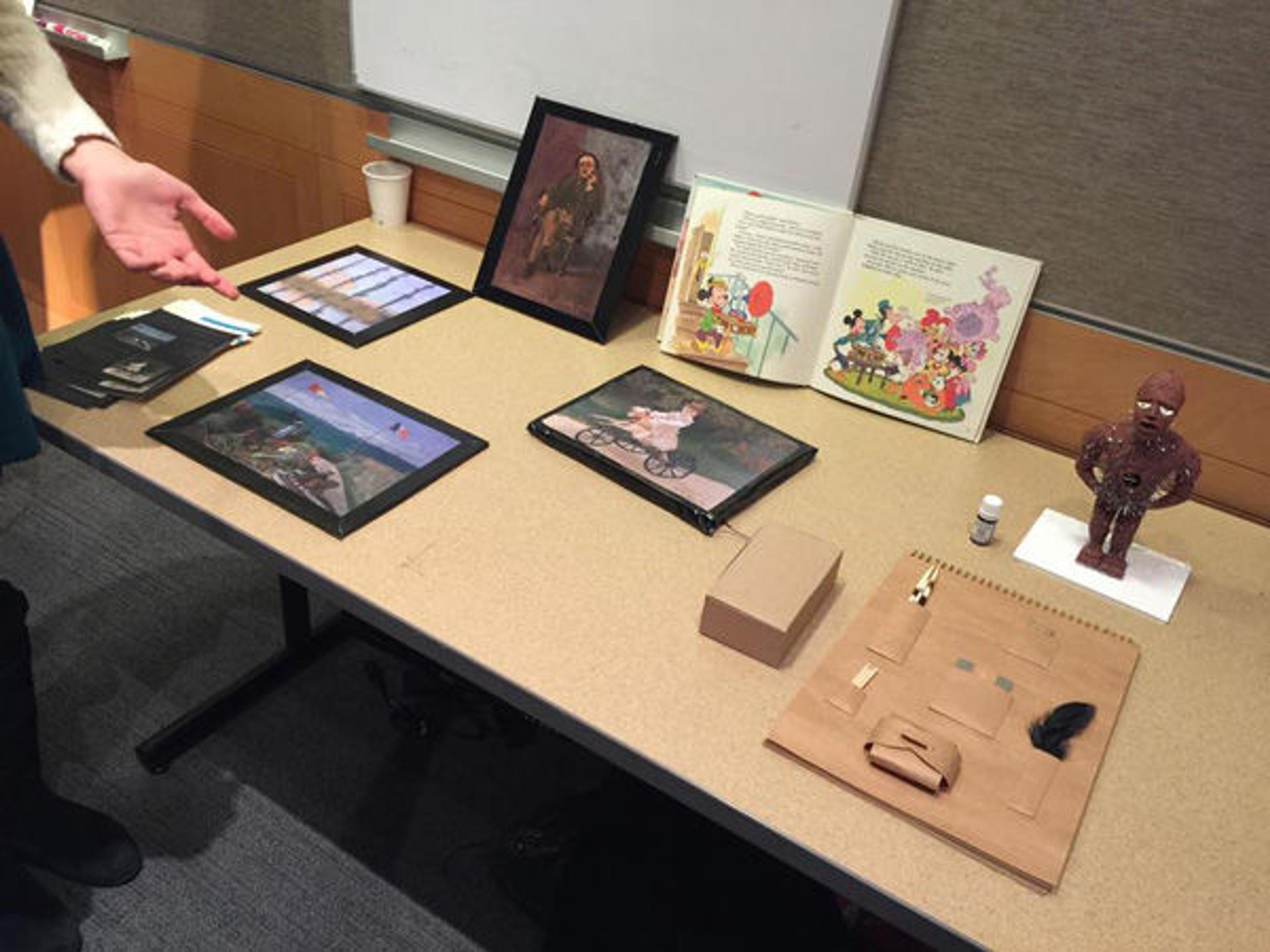
Multisensory Met, a series of activities designed to create a more fulfilling museum experience, in the spring 2015 MediaLab Expo. Image courtesy of the author
In order to protect the artworks, visitors are strictly forbidden from having any physical contact with the art. This inspired me to create Multisensory Met, a series of activities designed to provide a museum experience that makes use of all the senses. I believe that creating a multisensory environment will truly enhance the museum experience.


